Hello readers! I’m Khuram, and for the past 6+ years, I’ve been sharing informative articles that simplify complex topics. Today, I’ll explain something we hear about almost every day climate.
You’ve probably heard people say, “The climate is changing,” or “This region has a dry climate.” But have you ever wondered what climate truly means?
In simple words, climate is the long-term pattern of weather in a specific area. While weather can change from day to day, climate tells us what to expect over months, years, or even centuries.
Let’s dive deeper and understand how climate affects our world, why it matters, and how it’s different from weather.
What is the Definition of Climate?
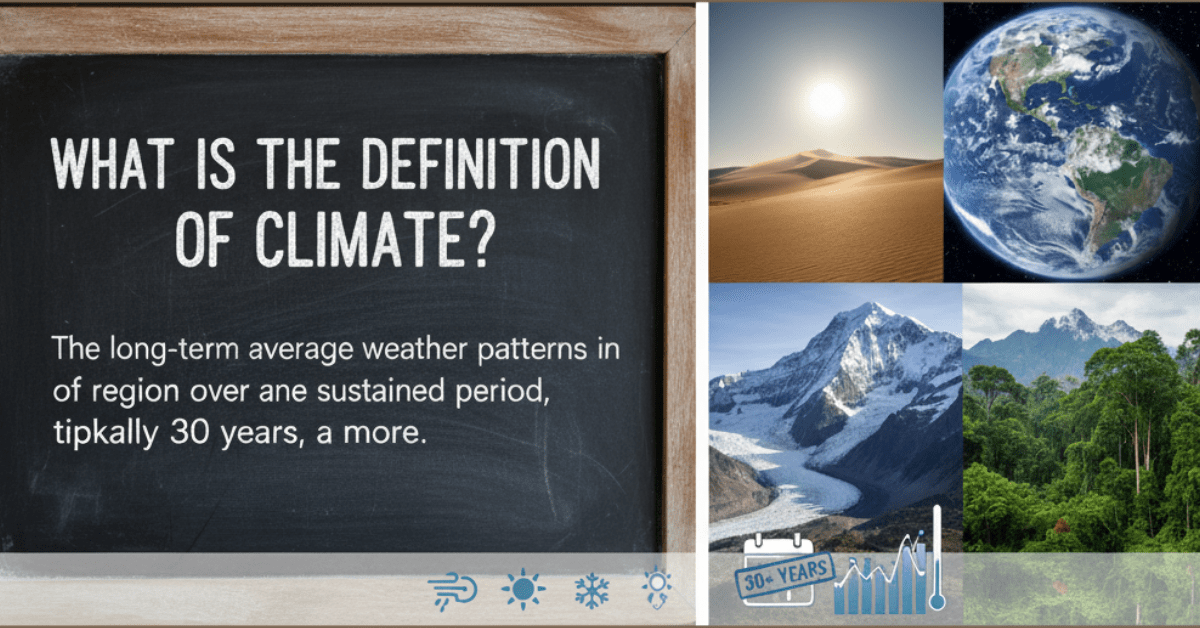
Climate refers to the average weather conditions of a place over a long period of time usually 30 years or more. It includes temperature, rainfall, humidity, wind, and other atmospheric elements.
For example, deserts have a hot and dry climate, while tropical regions have a humid and rainy climate.
Think of it this way if weather is your daily mood, then climate is your overall personality.
Climate vs. Weather: The Key Difference
One of the biggest confusions people have is between weather and climate. Let’s clear that up:
| Aspect | Weather | Climate |
| Time Frame | Changes daily or weekly | Observed over decades |
| Example | “It’s raining today.” | “This city has a rainy climate.” |
| Measurement | Short-term (hours to days) | Long-term (30+ years) |
| Focus | Daily changes in atmosphere | Average patterns and trends |
So, while weather tells you what’s happening today, climate helps predict what’s typical for the future.
The Main Elements of Climate
To understand climate better, let’s look at its main elements:
1. Temperature
Temperature tells us how hot or cold a region usually is. It’s the first thing that defines a climate.
2. Precipitation
This includes rain, snow, or hail. The amount and pattern of rainfall define whether an area is dry (like a desert) or wet (like a rainforest).
3. Humidity
Humidity is the amount of moisture in the air. Coastal regions often have higher humidity compared to inland areas.
4. Wind Patterns
Wind affects temperature, rainfall, and air pressure. Some regions are windy year-round, influencing their overall climate.
5. Sunshine Duration
The amount of sunlight received daily shapes both temperature and weather patterns.
Types of Climate Around the World
Our Earth has a variety of climates, and each supports different forms of life and landscapes. Let’s explore the five main climate types:
- Tropical Climate: Hot and humid throughout the year (e.g., Indonesia, Brazil).
- Dry Climate: Very little rainfall, mostly deserts (e.g., Sahara, Arabian Peninsula).
- Temperate Climate: Moderate weather with four distinct seasons (e.g., Europe, USA).
- Continental Climate: Hot summers and cold winters, usually inland (e.g., Russia, Canada).
- Polar Climate: Extremely cold and icy year-round (e.g., Antarctica, Greenland).
Each of these climates affects the lifestyle, agriculture, and economy of the people living there.
Why Climate Matters to Us
Understanding climate isn’t just for scientists it’s useful for everyone. Here’s why:
- Agriculture: Farmers plan crops based on the climate of their area.
- Tourism: Travelers choose destinations according to the climate.
- Health: Extreme climates can affect our physical and mental health.
- Economy: Countries adapt industries (like fishing or farming) to match their climate.
- Sustainability: Climate knowledge helps fight global challenges like climate change.
How Scientists Measure Climate
Climate isn’t just an opinion it’s based on scientific observation. Scientists use climate data from weather stations, satellites, and ocean buoys. They analyze decades of temperature, rainfall, and wind records to determine patterns.
This data helps in making climate models, which predict how the Earth’s climate might change in the future.
Climate Change: A Modern Concern
You’ve probably heard the term climate change, right? It means a long-term shift in global or regional climate patterns, mainly due to human activities like burning fossil fuels and deforestation.
This leads to:
- Rising global temperatures
- Melting glaciers
- Sea-level rise
- Unpredictable rainfall patterns
Understanding the definition of climate helps us realize why protecting our planet is essential.
Practical Tips to Adapt to Your Local Climate
Since I’ve worked in the information field for years, here are some useful, human-centered tips for adapting to your local climate:
- Dress smartly: Choose fabrics suitable for your region’s temperature.
- Save energy: Adjust your home’s heating or cooling based on the season.
- Plant local trees: They thrive better in your area’s climate.
- Stay informed: Follow local climate reports before planning trips or outdoor events.
These small actions help you live comfortably and sustainably.
Interesting Facts About Climate
- The hottest temperature ever recorded was 56.7°C in Death Valley, USA.
- The coldest place on Earth is Antarctica, with temperatures dropping below -89°C.
- The Amazon Rainforest produces about 20% of the world’s oxygen due to its humid climate.
- Climate influences languages, food, and culture in different parts of the world.
Frequently Asked Questions (FAQs)
1. What is the simplest definition of climate?
Climate means the average weather of a place over a long time, usually 30 years or more.
2. How is climate different from weather?
Weather changes daily, but climate describes long-term patterns.
3. What are the main factors that affect climate?
Latitude, altitude, ocean currents, and distance from the sea all affect climate.
4. How many climate types are there in the world?
There are five major types: tropical, dry, temperate, continental, and polar.
5. Why is climate change dangerous?
Because it causes extreme weather, food shortages, and affects wildlife and human life.
6. Can humans influence the climate?
Yes, human activities like burning fossil fuels and deforestation are major contributors to climate change.
Conclusion
As someone who’s been writing in the information field for more than six years, I can confidently say: understanding climate helps us understand ourselves. It connects us to nature, helps us plan our lives better, and reminds us how small actions can make a big difference.
Whether you’re a student, traveler, or just curious knowing the definition of climate opens your eyes to how beautifully complex and balanced our world really is.