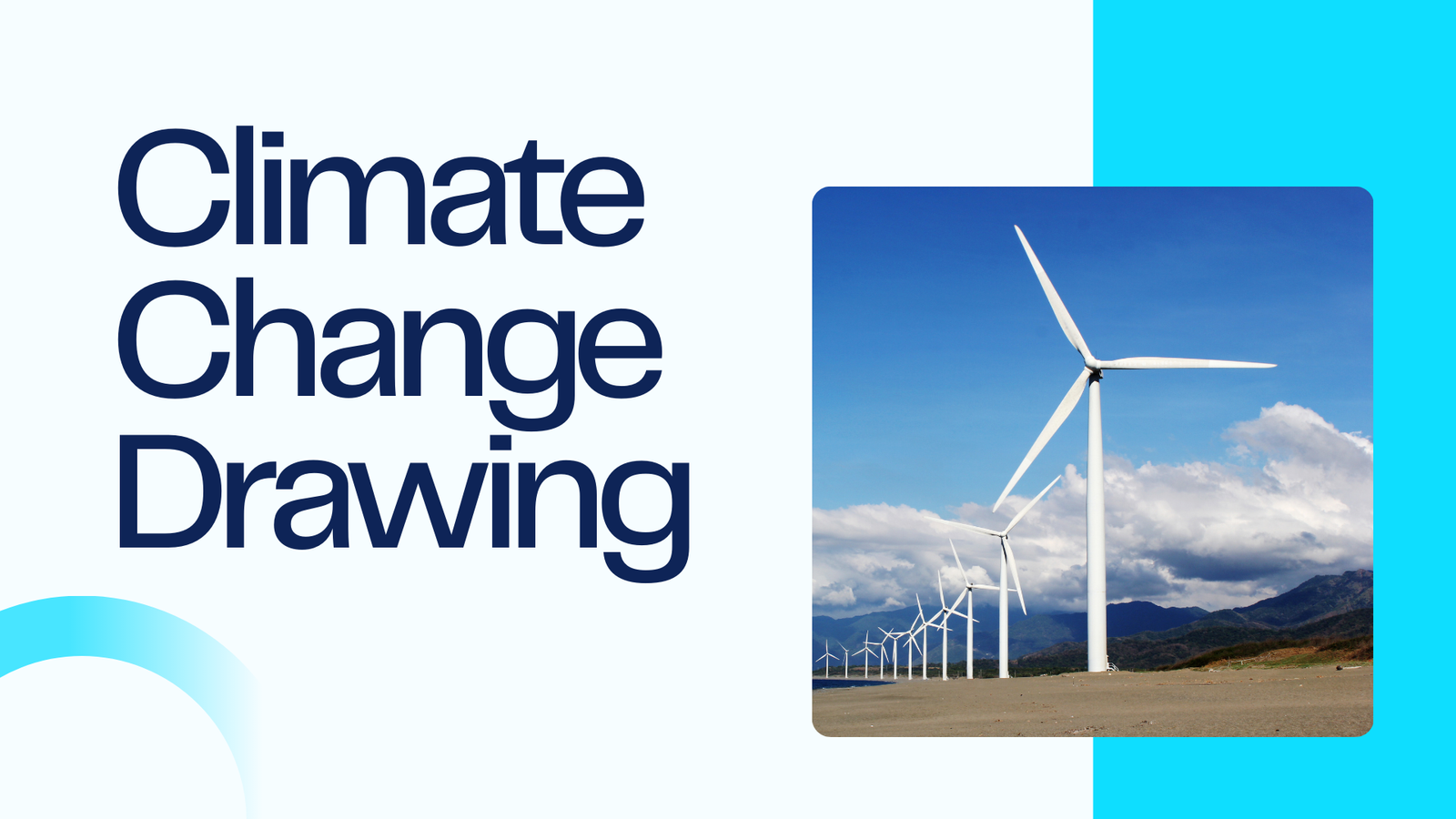
Art is a powerful tool for awareness, and climate change drawing is one way to communicate environmental issues visually. Whether you are a student, educator, or artist, understanding how to depict climate change effectively can inspire action and spread knowledge. In this article, I will explore drawing ideas, techniques, symbolism, and practical benefits for learning and advocacy.
What is Climate Change Drawing?
A climate change drawing is a visual representation that communicates the causes, impacts, and solutions related to climate change. These drawings can include:
- Global warming and rising temperatures
- Deforestation and habitat loss
- Melting glaciers and rising sea levels
- Pollution and waste management
- Renewable energy and conservation efforts
From my experience, combining art and information helps people understand complex climate issues more clearly.
Importance of Climate Change Drawings
- Raising Awareness
Visuals grab attention quickly. A drawing showing a flooded city or melting ice caps conveys urgency faster than words. - Educational Tool
Teachers can use drawings to explain climate change concepts like the greenhouse effect, carbon emissions, and ecosystem disruption. - Inspiring Action
Art encourages people to reduce carbon footprint, plant trees, and recycle, making climate change tangible and actionable. - Creativity and Expression
Students and artists can creatively express environmental concerns, combining imagination with factual knowledge.
Popular Themes for Climate Change Drawings
1. Global Warming
Illustrate the Earth overheating with sun rays, melting ice, or rising temperatures on thermometers.
2. Pollution
Show air, water, and soil pollution with smoke, trash, or oil spills.
3. Deforestation
Depict trees being cut down and wildlife losing habitats.
4. Renewable Energy
Include solar panels, wind turbines, and electric vehicles as solutions to climate change.
5. Natural Disasters
Draw floods, hurricanes, droughts, and wildfires to highlight the consequences of climate change.
Techniques for Effective Climate Change Drawings
- Symbolism
Use symbols like melting ice, burning forests, or endangered animals to convey messages quickly. - Colors
- Red and orange: Heat and danger
- Blue and white: Ice and water
- Green: Environment and hope
- Perspective and Scale
Draw large-scale disasters or small-scale human actions to show contrast and impact. - Mixed Media
Combine pencils, paints, and digital tools for more impactful visuals.
From my 6+ years of experience in the information sector, these techniques help both beginners and professionals communicate complex climate issues creatively.
How to Make Climate Change Drawings Educational
- Include labels and captions explaining each element
- Draw sequences showing cause and effect
- Combine facts and visuals, like CO₂ levels or temperature changes
- Encourage group projects in schools to foster collaboration and awareness
Educational climate change drawings make learning interactive and memorable.
Benefits of Climate Change Drawings
- Improves Understanding
Visual representation makes scientific concepts like greenhouse effect easier to understand. - Promotes Awareness
People are more likely to remember and act upon what they see in impactful visuals. - Encourages Creativity
Students and artists develop imagination while learning about environmental science. - Supports Campaigns
NGOs and environmental campaigns can use drawings for posters, social media, and educational materials.
Practical Tips for Creating Your Drawing
- Start with a clear concept or message
- Keep your drawings simple and expressive
- Use bright and contrasting colors to highlight issues
- Include solutions as well as problems to inspire action
- Share your drawings on social media or school projects to reach a wider audience
Final Thoughts
From my 6+ years of experience in the information sector, creating a climate change drawing is more than an art project it is a powerful tool for learning, awareness, and advocacy. By combining creativity with environmental knowledge, we can communicate urgent messages, educate communities, and inspire meaningful action against global warming and ecological destruction.
FAQs
Q1: What is a climate change drawing?
A1: It is a visual artwork depicting the causes, impacts, or solutions of climate change, such as global warming, pollution, or renewable energy.
Q2: Why are climate change drawings important?
A2: They educate, raise awareness, and inspire action by visually communicating complex environmental issues.
Q3: Can children create effective climate change drawings?
A3: Yes, simple drawings with clear symbols and bright colors can communicate climate issues effectively.
Q4: What tools can I use for climate change drawings?
A4: Pencils, crayons, paints, digital art tools, and mixed media all work well depending on skill and resources.
Q5: How can climate change drawings inspire action?
A5: Visuals make people more aware of environmental problems and encourage activities like recycling, tree planting, and energy conservation.